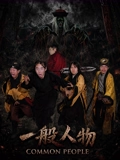
黄子华饰演的警察在一次抢劫案被车撞击导致半身不遂,同案中负责为歹徒开车的流氓李修贤则中枪变成植物人。黄子华不想象废人般过下半生,在智慧老人夺舍后变身的吴倩莲指导下,利用李修贤的躯体重生。不料李修贤原来是个可恶的人渣,在他家乡大屿山恶名远播。新的李修贤却聪明灵俐而有正义感,光 看他如何还债及重获三个老婆的芳心便趣味十足。知道内情的妹妹蔡少芬公开单恋哥哥,以及黄子华每次对李家的女人想入非非便要上厕所等成人趣味的安排也乐而不淫,颇令人有意外惊喜之感。 夺舍,在道教中指夺取别人的身体驱壳以求得生存。警官Tommy(黄子华饰)最喜欢哼的一句歌就是:“Tell Laura I love her。”,他的女友Laura也是警察,喜欢周华健,家里有一个华健的纸板人像。Tommy在和匪徒的交战中被车撞击导致下身瘫痪,大小便失禁。“夺舍”成功的吴倩莲原来是失意女子从楼上跳下而未死,她指点Tommy,使警官借南丫岛烂仔腾鸡(李修贤饰)的躯体存活下来。腾鸡原来是个非常令人讨厌的人,在他家乡大屿山恶名远播,现在变成了一个孝顺大方聪明伶俐而有正义感的好人。Tommy的灵魂帮腾鸡解决了好多家庭问题,可是Laura却对这个新的 Tommy失去了兴趣,智慧老人告诉他解决办法只有Walk out,即弃舍。而腾鸡原来参与一宗抢劫案的搭档怕他不牢靠,要将他除掉,经过追逐,车毁人亡,腾鸡命归西天,黄子华脱壳而出,变回女友的歌星偶像周华健。一年后,腾鸡成为了南丫岛的岛主,一个好人,而且还参加竞选。
Fleeing from their violent father, siblings Lucía and Adrián take refuge in a remote mansion. With the help of a hidden micro-camera on a cat, Lucía uncovers a terrifying secret: their neighbors are part of a criminal network that kidnaps teenage girls to make snuff films, and they intend to get rid of the siblings. As Lucía fights to protect her brother, she must face a dark family curse that follows them into their newfound sanctuary.
In 2013, an Australian man a few months shy of turning 60 decided to walk the Camino de Santiago – an 800km pilgrimage trail across the top of Spain. He had no known religion, and absolutely no idea why he felt so deeply compelled to do this torturous walk. But compelled, he was. He completed the walk, battling a “triumvirate of pain” - a knee that he later discovered lacked an...
Calvin Trask lives in a dead end Arctic town on the fringes of society, until mysterious stranger Lucas Wade arrives, turning his solitary life upside down. Calvin's curiosity gets the better of him and is quickly pulled into Lucas' dangerous world. As secrets slowly unravel, Calvin realises just what kind of jeopardy he's put himself in, a place where murder and betrayal are a...
In 2013, an Australian man a few months shy of turning 60 decided to walk the Camino de Santiago – an 800km pilgrimage trail across the top of Spain. He had no known religion, and absolutely no idea why he felt so deeply compelled to do this torturous walk.
But compelled, he was.
He completed the walk, battling a “triumvirate of pain” - a knee that he later discovered lacked any meaningful cartilage, a blister the sight of which would make a grown man weep, and shin-soreness that felt like his lower limb had been split with a mountain axe wielded by a demented troll.
Arriving at the end of the Camino, the majestic cathedral in Santiago de Compostela, he expected an epiphany – an answer to the question he’d been asking himself every day: Why am I doing this?
But no answer came.
So when he got home he wrote a book, hoping the answer would reveal itself in his scribblings. The result was The Way, My Way, a humourous and self-deprecating book that many consider the best memoir ever written on walking the Camino.
The book has now been made into a film, and it’s an extraordinary account of a man at a pivotal point in his life, searching for meaning and finding himself undergoing a fundamental transformation so profound that he now divides his life into “Before the Camino” and “After the Camino.”
It’s a story particular to one man, yet of appeal to anyone seeking a greater meaning from life.