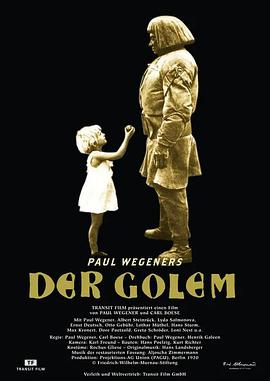
德国表现主义代表作品 A 公元4世纪的犹太教法典(Talmud)中提到过Rava造golem的事。Rava的全称叫Rabbi Abba ben Rav Hamma,他造了一个不会说话的“人”。他把这个“人”送到Rav Zera面前,由于它对问话没有反应,Zera就说:“你准是由我的某个同行造的。回归尘土吧。” (Sanhedrin 65b) 在宗教意义上,只有上帝造的人才是完整的人,才会说话,而Rava造的不是真正的人。按照犹太传统,当时那些拉比(Rabbis)和大贤(Sages)都能造人或者动物Golems,这并没有什么特别之处。 B Golem的传说后来逐渐改变,十七世纪由布拉格的Rabbi Loew(Rabbi意犹太教的学者)创造了一个Golem来保护住在犹太区的犹太人免遭反犹主义的暴力侵扰。为避免麻烦,故事中的学者总是在Golem完成它的使命以后,再自觉地把它重新变回为无生命的泥土。一天,Rabbi忘记将Golem变回泥土,当城市所有人已经作礼拜去了,Golem发怒毁坏全城。这个故事架构一直到十九、二十世纪都还在文学著作里出现,最著名的是Gustav Meyrink的《Der Golem》,在一九一五年普遍被阅读,值得探究的是,这样的小说刚好出现在工业革命的时代。这反映了人们对于科技所带来伦理的挑战的惶恐。 C 1920年由Carl Boese和Paul Wegener执导的经典默片Der Golem, wie er in die Welt kam (The Golem How He Came Into the World) 就是改编自Gustav Meyrink的小说。这部影片集中体现了德国表现主义艺术的特点,对Fritz Lang等导演产生过重大影响。其中精心设计了手提灯光、煤油灯光、火炬等一系列光源效果,用于表现人物的心理状态,营造影片的环境气氛。这种具有表现力地运用灯光效果的方法,最终发展为所有德国电影形式表现的一大特征,同时也为电影恐怖片的造型的表现手段提供了经验。 D Golem的传说同样也是玛丽·雪莱的著名科幻小说《弗兰肯斯坦》的来源之一,不过不同的是:传说中的Golem笨拙、鲁莽,既不知道自己有多大的力量,也不知道自己有多笨或者有多无知;而在玛丽·雪莱笔下,维克多·弗兰肯斯坦所创造的怪物虽然莽撞,但却善于学习,极富人性,懂得痛苦、同情、怜悯、爱慕、悔恨等等人类的情感,甚至比年轻的弗兰肯斯坦本人还成熟些。十八世纪的启蒙运动由提倡理性主义发展到后期,理性开始压抑人的情感,理性主义变成一种冰冷僵硬的东西。于是在德国兴起了反对启蒙运动的浪漫主义运动,十九世纪前期,浪漫主义文学席卷欧美,玛丽·雪莱的《弗兰肯斯坦》就是在这个背景下诞生的。不过在通俗文学中反理性反科学的倾向总是显得有些矫枉过正,科学和科学家的形象被简单化、平面化,这种描绘“科学怪人”的方式在默片时代的德国表现主义电影中曾经十分兴盛,后来一直在好莱坞许多拙劣的科幻片(这种片子的一大特点就是不断拍摄越来越拙劣的续集)中继续。 E当代科学哲学研究最热门的一个方向是科学知识社会学(SSK),研究方法是深入到科学具体研究过程中,细致考察经费筹集、论文发表等每一个环节,研究科学知识是如何建构起来的,强调社会因素在建构过程中的作用。SSK的代表人物柯林斯和平奇在1993年出版过一本普及性的小册子,名字就叫Golem,翻译成《勾勒姆:关于科学人们应知道些什么》。柯林斯坦诚地说,他这部书是想用“勾勒姆”解释“科学”,“我们试图证明它不是一个邪恶的造物,只是有点疯狂(或译成‘傻’)(it is not an evilcreature but it is a little daft)。不要责备勾勒姆科学的过失;是我们人类在犯错误。如果勾勒姆尽力做其自己的事情,它不应受到责备。但是我们不能奢望过多。勾勒姆尽管强有力,它却是我们的文化(art)或者我们的技艺(craft)的造物。”SSK常常被斥为带有反科学倾向,但可以看出,它与浪漫主义时期的反科学倾向完全不同。它所描绘的科学形象丰满,有血有肉,它所谓的“反科学”无非是要抹去那些被强加于科学的重重面纱,还科学一个真实的面目,绝非19世纪简单的拒斥、贬低科学。
A satirical comedy that pokes fun at Spanish social and political stereotypes, featuring parodies of real events and special guest appearances from the political sphere.
7th century Arabia. A time of feuding tribes vying for power and supremacy. Courageous Princess Hind (Aiysha Hart) refuses to serve as concubine to the merciless Sassanid Emperor Kisra (Sir Ben Kingsley). Escaping with her father King Numan into the vast and unforgiving desert, Hind is pursued by Kisra’s mercenary and his bloodthirsty troops. Father and daughter are forced to trust a mysterious bandit (Anthony Mackie). Against all odds, Hind unites the fractious tribes against the powerful invading military of the Sassanid Empire. In an epic showdown, the Battle of Ze Qar will forever change the Arabian Peninsula and echo throughout history.
Fleeing from their violent father, siblings Lucía and Adrián take refuge in a remote mansion. With the help of a hidden micro-camera on a cat, Lucía uncovers a terrifying secret: their neighbors are part of a criminal network that kidnaps teenage girls to make snuff films, and they intend to get rid of the siblings. As Lucía fights to protect her brother, she must face a dark family curse that follows them into their newfound sanctuary.
In 2013, an Australian man a few months shy of turning 60 decided to walk the Camino de Santiago – an 800km pilgrimage trail across the top of Spain. He had no known religion, and absolutely no idea why he felt so deeply compelled to do this torturous walk. But compelled, he was. He completed the walk, battling a “triumvirate of pain” - a knee that he later discovered lacked an...
Calvin Trask lives in a dead end Arctic town on the fringes of society, until mysterious stranger Lucas Wade arrives, turning his solitary life upside down. Calvin's curiosity gets the better of him and is quickly pulled into Lucas' dangerous world. As secrets slowly unravel, Calvin realises just what kind of jeopardy he's put himself in, a place where murder and betrayal are a...
In 2013, an Australian man a few months shy of turning 60 decided to walk the Camino de Santiago – an 800km pilgrimage trail across the top of Spain. He had no known religion, and absolutely no idea why he felt so deeply compelled to do this torturous walk.
But compelled, he was.
He completed the walk, battling a “triumvirate of pain” - a knee that he later discovered lacked any meaningful cartilage, a blister the sight of which would make a grown man weep, and shin-soreness that felt like his lower limb had been split with a mountain axe wielded by a demented troll.
Arriving at the end of the Camino, the majestic cathedral in Santiago de Compostela, he expected an epiphany – an answer to the question he’d been asking himself every day: Why am I doing this?
But no answer came.
So when he got home he wrote a book, hoping the answer would reveal itself in his scribblings. The result was The Way, My Way, a humourous and self-deprecating book that many consider the best memoir ever written on walking the Camino.
The book has now been made into a film, and it’s an extraordinary account of a man at a pivotal point in his life, searching for meaning and finding himself undergoing a fundamental transformation so profound that he now divides his life into “Before the Camino” and “After the Camino.”
It’s a story particular to one man, yet of appeal to anyone seeking a greater meaning from life.