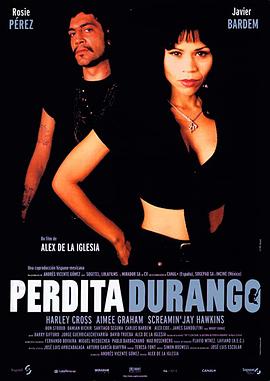
琵蒂塔(萝西培瑞兹,「劫后生死恋」)是一个不折不扣的女流氓,她的男朋友罗米欧(贾维尔巴丹)则是到处杀人抢劫的小混混,罗米欧信奉邪教,经常偷取墓地中的尸体,作为自己魔鬼祭典中的祭品。一日,黑道老大山托斯雇请罗米欧与琵蒂塔,偷取一辆装满婴儿尸体的卡车,在执行任务的过程中,两人绑架了一对情侣,一路上折磨虐待他们,甚至打算杀了他们,做为罗米欧宗教祭台上的牺牲品。但他们的任务却在此时出错,导致黑道老大山托斯与警方展开激烈的枪战,手下死伤惨重,山托斯誓言要报复琵蒂塔与罗米欧,但这一对"闪灵双煞"仍挟持着两个人质,朝着拉斯维加斯前进…此片融合了性、暴力、巫毒、诡异与黑色幽默,跨越了惊悚电影与公路电影的类型,导演Alex de la Iglesia的作品,曾被拿来与奥立佛史东、大卫林区与约翰华特斯相提并论,在影评与观众间都引起不小的回响。
Fleeing from their violent father, siblings Lucía and Adrián take refuge in a remote mansion. With the help of a hidden micro-camera on a cat, Lucía uncovers a terrifying secret: their neighbors are part of a criminal network that kidnaps teenage girls to make snuff films, and they intend to get rid of the siblings. As Lucía fights to protect her brother, she must face a dark family curse that follows them into their newfound sanctuary.
In 2013, an Australian man a few months shy of turning 60 decided to walk the Camino de Santiago – an 800km pilgrimage trail across the top of Spain. He had no known religion, and absolutely no idea why he felt so deeply compelled to do this torturous walk. But compelled, he was. He completed the walk, battling a “triumvirate of pain” - a knee that he later discovered lacked an...
Calvin Trask lives in a dead end Arctic town on the fringes of society, until mysterious stranger Lucas Wade arrives, turning his solitary life upside down. Calvin's curiosity gets the better of him and is quickly pulled into Lucas' dangerous world. As secrets slowly unravel, Calvin realises just what kind of jeopardy he's put himself in, a place where murder and betrayal are a...
In 2013, an Australian man a few months shy of turning 60 decided to walk the Camino de Santiago – an 800km pilgrimage trail across the top of Spain. He had no known religion, and absolutely no idea why he felt so deeply compelled to do this torturous walk.
But compelled, he was.
He completed the walk, battling a “triumvirate of pain” - a knee that he later discovered lacked any meaningful cartilage, a blister the sight of which would make a grown man weep, and shin-soreness that felt like his lower limb had been split with a mountain axe wielded by a demented troll.
Arriving at the end of the Camino, the majestic cathedral in Santiago de Compostela, he expected an epiphany – an answer to the question he’d been asking himself every day: Why am I doing this?
But no answer came.
So when he got home he wrote a book, hoping the answer would reveal itself in his scribblings. The result was The Way, My Way, a humourous and self-deprecating book that many consider the best memoir ever written on walking the Camino.
The book has now been made into a film, and it’s an extraordinary account of a man at a pivotal point in his life, searching for meaning and finding himself undergoing a fundamental transformation so profound that he now divides his life into “Before the Camino” and “After the Camino.”
It’s a story particular to one man, yet of appeal to anyone seeking a greater meaning from life.