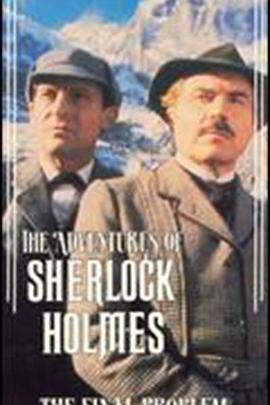
In impeccable evening dress, Mark Gatiss and Matthew Sweet ponder the Bonds we've seen on screen since Dr. No in 1962.
To date, six actors have portrayed British Secret Service agent James Bond. Which 007 is the best? Was Sean Connery impossible to surpass? Was George Lazenby really that bad? Was Live and Let Die really a blaxploitation movie in disguise?
Gatiss and Sweet consider these and many other questions, and raise a martini in honour of their premium Bond.
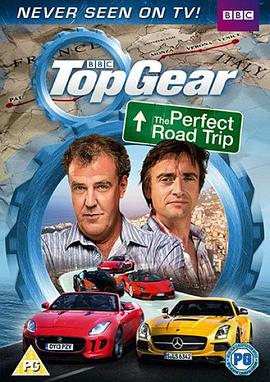
Seven days, more than 1,000 miles, 20 cars, two boats, a motorbike and one dream...The Perfect Road Trip.
The aim: to select the ideal mode of transport for each leg of a pilgrimage from Venice, Italy to Pau in France – home to a legendary street circuit and the origins of Grand Prix racing. On the way we prepare by taking to the track at Monza – the home of Italian Formula One. We try to get noticed on the road course in Monaco in a Bugatti, a Lamborghini and a Model T Ford. After cruising the canals in Venice we take to the tarmac and things look good - thanks to the Ferrari F12 Berlinetta and Mercedes SLS Black. Throw in a Pagani Huayra, Porsche Cayman S and a GT3 as well as the Aston Martin Vanquish centenary edition, Bentley V8 convertible, Rolls Royce Phantom coupe and the face-bending BAC Mono all seems pretty perfect to us.
There’s culture too. An all-out effort to get the Birmingham burger-boy to savour the culinary delights of Italy and France – including octopus and an old balcony.
Then it’s time to turn up the heat even more with a Top Gear race... and the worst forfeit in television history.
Finally we head to the historic road course in Pau. Surely nothing could spoil our Perfect Road Trip...
Enjoy...!
Jeremy Clarkson
Richard Hammond
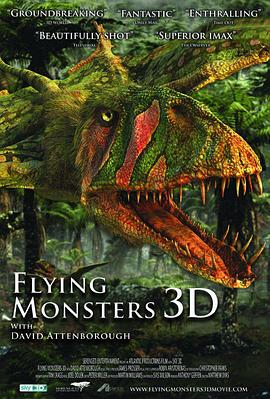
For thousands of years, humans have believed that there were once flying monsters. But did they really exist beyond our nightmares? 220 million years ago dinosaurs were beginning their domination of Earth. But another group of reptiles was about to make an extraordinary leap: pterosaurs were taking control of the skies. The story of how and why these mysterious creatures took to the air is more fantastical than any fiction. In Flying Monsters, David Attenborough the worlds leading naturalist, sets out to uncover the truth about the enigmatic pterosaurs, whose wingspans of up to 40 feet were equal to that of a modern day jet plane. Attenborough works with scientists to understand the incredible story of the evolution of the pterosaurs, a story that unfolds in such stunning locations as New Mexico, the Jurassic Coast of Lyme Regis in Britain, an ancient pterosaur landing site in Southern France and a fossil pit in Germany where near perfect pterosaur specimens have been found. The central question and one of the greatest mysteries in palaeontology is: how and why did pterosaurs fly? How did lizards the size of giraffes defy gravity and soar through prehistoric skies? Driven by the information he finds as he attempts to answer these questions, Attenborough starts to unravel one of sciences more enduring mysteries, discovering that the marvel of pterosaur flight has evolutionary echoes that resonate even today. Flying Monsters is a groundbreaking film that uses cutting-edge 3D technology and CGI to bring the story of giant flying monsters and their prehistoric world to life. Audiences of all ages will be in awe as they enter the world and experience, as never before, REAL Flying Monsters in HD.
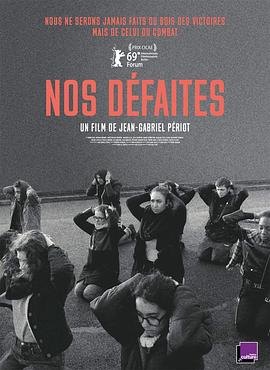
2018年5月和6月,Jean Gabriel P_Riot与位于Ivry Sur Seine的一所高中的10名电影班学生合作,开展了一项将电影与政治结合起来的项目。学生们在摄像机前和摄像机后工作,重新布置罢工、抵抗和劳资纠纷的场景,这些电影可以追溯到20世纪60年代末到70年代末,包括让-卢克-戈达尔和阿兰-坦纳的电影。nos d_faites汇集了调查结果,并增加了采访,在采访中,导演询问学生他们刚刚表演的场景,关于“阶级”、“工会”和“政治参与”等概念,以及更广泛的社会背景。这是一个简单,但尖锐的设置,让观众一瞥年轻一代如何看待政治和过去的政治电影。这部影片还记录了导演试图激怒学生的企图。在导演和学生似乎处于平等地位的遭遇中,基于从未见过的导演更多类似于老师的提问,以及此时此刻对革命的思考:起义的表现反映了同样的情况。这会导致一个真实的发生吗?
In May and June 2018, Jean-Gabriel Périot collaborated with ten students in a film class at a high school in Ivry-sur-Seine on a project that unites cinema with politics. The students worked both in front of and behind the camera, restaging scenes of strikes, resistance, and labour disputes from films dating from the late 1960s to the late 1970s, including ones by Jean-Luc Godard and Alain Tanner. Nos défaites assembles the results, and adds interviews in which the director queries the students about the scenes they’ve just acted in, about such concepts as “class,” “labour union,” and “political engagement,” about wider social contexts. It’s a simple, yet trenchant setup, affording viewers a glimpse of how a younger generation sees politics and the political cinema of the past. The film also documents the director’s attempts to stir up the students. The conversations vary between encounters in which director and students seem on an equal footing, based on more teacher-like questioning by the never-visible director, and contemplations of revolution in the here and now: the performance of an uprising follows reflection upon the same. Could this lead to one happening for real?
回到1968年的电影时代,继续对重放从过去跳出来的电影节选的年轻人进行今天的采访,我们的失败描绘了我们当前与政治的关系。我们的失败,还是我们有足够的力量来面对今天的混乱?
By going back into the cinema of the 1968 era and going forward with present-day interviews of young people who replay excerpts of film s jumping out from the past, Our Defeats draw the portrait of our current relations with politics. Our Defeats, or do we keep enough forces to confront ourselves with the chaos of today?
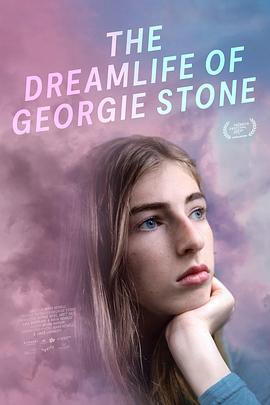
Spanning 19 years, The Dreamlife of Georgie Stone reveals the memories of Georgie Stone, an Australian transgender teen as she helps change laws, affirms her gender, finds her voice, and emerges into adulthood.
The Dreamlife Project, a collaborative storytelling campaign developed and led by an advisory committee of young transgender, gender diverse and non-binary people, will accompany the film on release.