Alive and Kicking gives the audience an intimate, insider's view into the culture of the current swing dance world while shedding light on issues facing modern society.
通过伊利诺伊州一户有机农场主的视角,展现了一批历经大工业化农业运作模式的农场主对于更加环保更加健康的农作方式的探索和坚持。
America is facing a food crisis driven by profitability and a lack of consumer education. While the window to transforming our heartland continues to shrink, passionate individuals have emerged who provide hope that the health of our nation might still remain within our grasp. Sustainable weaves together expert analysis of America's food and farming system with a powerful narrative of one extraordinary farmer who is determined to create a sustainable future for his community. Amidst the cornfields of Illinois lives the hero of the film - Marty Travis, a seventh-generation farmer who watched his land and community fall victim to the pressures of big agribusiness. Determined to create a proud legacy for his son, Marty transforms his profitless wasteland and pioneers the sustainable food movement in Chicago. The film unearths the future of agriculture - a marriage of age-old tradition and groundbreaking science. Industry pioneers from around the nation reveal the secrets behind human ...
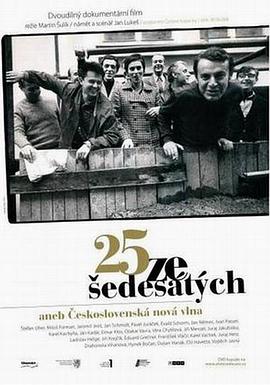
The 2-part feature-length documentary "25 ze šedesátých aneb Československá nová vlna" ("25 from the Sixties, or Czechoslovak New Wave") presents a complex view of the phenomenon of Czech and Slovak New Wave in the cultural and social context of the 60's. 25 fundamental films commented on by their makers and film historians offer the viewer a dramatic insight into the golden era of Czechoslovak cinema.
The documentary is a follow-up on the biographical TV series "Zlatá šedesátá" (Czech Television, 2009), based on the filmmakers' personal remembrances. As opposed to the series, the documentary presents the Czech and Slovak cinema of the 60's in the national, international and also inter-generational context. It describes the ways the New Wave crossed the existing artistic boundaries, how it variegated the world cinema and where it left an ineffaceable impression. It analyses the work of filmmakers in a state-funded cinema, under the pressure of ideological demands on one hand and commerce on the other. It presents the dilemma of a man - an artist - on the edge between contradictory social systems and incongruous aesthetic requirements. The existential drama of a man acting freely and at the same time mercilessly crushed by the wheels of the system.
The 60's are, from this point of view, mostly an era of fortunate historical constellation, not only in - at that time - Czechoslovakia, but on a world-wide scale. An era of expectations and upswing, but also an era of exemplary human decisions and artistic pursuit. Those are some of the things "25 ze šedesátých aneb Československá nová vlna" wants to commemorate.
Part 1 comments on:
■"Slnko v sieti" ("The Sun in a Net," 1962) by Štefan Uher
■"Konkurs" ("Audition," 1963) by Miloš Forman
■"Křik" ("The Cry," 1963) by Jaromil Jireš
■"Postava k podpírání" ("Joseph Kilian," 1963) by Pavel Juráček
Jan Schmidt
■"Každý den odvahu" ("Courage for Every Day," 1964) by Evald Schorm
■"Démanty noci" ("Diamonds of the Night," 1964) by Jan Němec
■"Intimní osvětlení" ("Intimate Lighting," 1966) by Ivan Passer
■"Ať žije republika" ("Long Live the Republic," 1965) by Karel Kachyňa
■"Obchod na korze" ("The Shop on Main Street," 1965) by Ján Kadár
Elmar Klos
■"Romance pro křídlovku" ("Romance for Bugle," 1966) by Otakar Vávra
■"Sedmikrásky" ("Daisies," 1966) by Věra Chytilová
■"Ostře sledované vlaky" ("Closely Watched Trains," 1966) by Jiří Menzel
Part 2 comments on:
■"Kristove roky" ("The Prime of Life," 1967) by Juraj Jakubisko
■"Stud" ("Shame," 1967) by Ladislav Helge
■"Svatba jako řemen" ("A Hard and Fast Marriage," 1967) by Jiří Krejčík
■"Drak sa vracia" ("Dragon's Return," 1967) by Eduard Grečner
■"Marketa Lazarová" ("Marketa Lazarová," 1967) by František Vláčil
■"Spřízněni volbou" ("Elective Affinities," 1968) by Karel Vachek
■"Spalovač mrtvol" ("The Cremator," 1968) by Juraj Herz
■"Zabitá neděle" ("Squandered Sunday," 1969) by Drahomíra Vihanová
■"Pasťák" ("The Decoy," 1968) by Hynek Bočan
■"Případ pro začínajícího kata" ("Case for a Rookie Hangman," 1969) by Pavel Juráček
■"322" ("322," 1969) by Dušan Hanák
■"Slávnosť v botanickej záhrade" ("Celebration in the Botanical Garden," 1969) by Elo Havetta
■"Všichni dobří rodáci" ("All My Good Countrymen," 1968) by Vojtěch Jasný
A man is waiting in his hut in the desolate expanse of the Russian Arctic. He is holding out in order to observe a natural event that occurs here, every year. But ocean warming is taking its toll.
U.S. Marine Richard “Mac” McKinney had planned to return home to Muncie, Indiana as a hero – in an American flag-draped coffin. But that didn’t happen. Instead, after 25 years of service, he returns alive and filled with an all-consuming rage. Still fueled by his desire to die for his country, he plans to bomb the local mosque. But when he comes face to face with the community of Afghan refugees and others of Muslim faith that he seeks to kill, his plan takes an unexpected turn.
On September 11th 1973, Salvador Allende's democratically elected government was ousted by a United States-backed coup that resulted in Allende's death, and left the country in the hands of Augusto Pinochet's military dictatorship for 17 years. It's time to remember Salvador Allende, that unsual man - for historical reasons, certainly, but also for the cruelty surrounding his memory.
时尚顽童Jean Paul Gaultier多年来以创意挑战一切社会定型,高举怪人旗号,颂赞每个人的独特奇异之处。 2018年,他更创作出一场跨越时装、电影、剧场、舞蹈的「时尚怪人show」,放在巴黎最著名的剧院内上演,用最艳丽夺目的方式诉说一生故事︰儿时的变性小熊公仔如何启发「爱美神飞弹」设计、爱人Francis如何成就今日的他……Jean Paul Gaultier将亲自带你游走盛会的台前幕后,在「怪人」群中寻找奇幻的美感。
Fårö Document 1979 is the ten-year followup to the first documentary Bergman made about his adopted home, Fårö, where he filmed many of his best works and lived until the end of his life