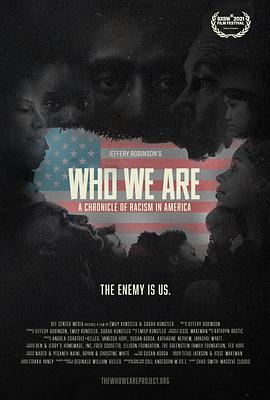
ACLU lawyer Jeffery Robinson’s shattering talk on the history of U.S. anti-Black racism is interwoven with archival footage, interviews and Robinson’s story, exploring the legacy of white supremacy and our collective responsibility to overcome it.
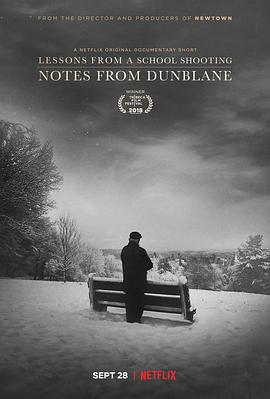
In the wake of the 2012 Sandy Hook Elementary School massacre that took the lives of 20 first graders and their teachers, local clergymen Father Bob Weiss receives a letter from a fellow priest in Dunblane, Scotland, whose community suffered an eerily similar fate in 1996. From across the Atlantic, the two priests forge a poignant bond through the shared experience of trauma and healing.
Rebecca Miller’s film is a portrait of her father, his times and insights, built around impromptu interviews shot over many years in the family home. This celebration of the great American playwright is quite different from what the public has ever seen. It is a close consideration of a singular life shadowed by the tragedies of the Red Scare and the death of Marilyn Monroe a bracing look at success and failure in the public eye an honest accounting of human frailty a tribute to one artist by another. Arthur Miller: Writer invites you to see how one of America’s sharpest social commentators formed his ideologies, how his life reflected his work, and, even in some small part, shaped the culture of our country in the twentieth century. An HBO Documentary Film.
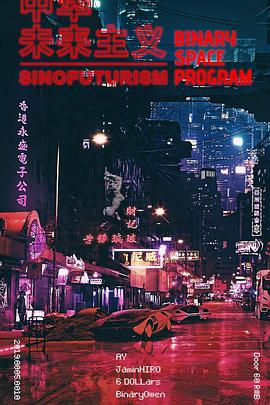
quotSinofuturism is an invisible movement. A spectre already embedded into a trillion industrial products, a billion individuals, and a million veiled narratives. It is a movement, not based on individuals, but on multiple overlapping flows. Flows of populations, of products, and of processes. Because Sinofuturism has arisen without conscious intention or authorship, it is often mistaken for contemporary China. But it is not. It is a science fiction that already exists.
Sinofuturism is a video essay combining elements of science fiction, documentary melodrama, social realism, and Chinese cosmologies, in order to critique the present-day dilemmas of China and the people of its diaspora.
With reference to Afrofuturism and Gulf Futurism, Sinofuturism presents a critical and playful approach to subverting cultural clichés.
In Western media and Orientalist perceptions, China is exotic, strange, bizarre, kitsch, tacky, or cheap. In its domestic media, China portrayed as heroic, stable, historic, grand, and unified. Rather than counteract these skewed narratives, Sinofuturism proposes to push them much further.
By embracing seven key stereotypes of Chinese society (Computing, Copying, Gaming, Studying, Addiction, Labour and Gambling), it shows how China's technological development can be seen as a form of Artificial Intelligence."
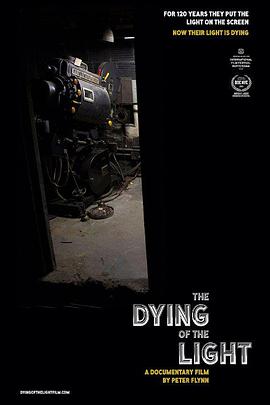
Largely unchanged for more than a century, the projection of photochemical film faces an uncertain future in the digital age. The practice of handing and projecting film is in danger of being lost and the role of film projectionist is nearing extinction. THE DYING OF THE LIGHT explores at the history and craft of motion picture presentation through the lives and stories of the last generation of career projectionists. By turns humorous and melancholic, their candid reflections on life in the booth reveal a world that has largely gone unnoticed and is now at an end. The result is a loving tribute to the art and romance of the movies-and to the unseen people who brought the light to our screens.
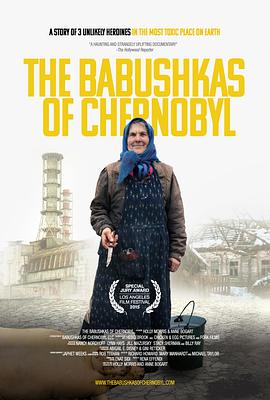
In the radioactive Dead Zone surrounding Chernobyl’s Reactor No. 4, a defiant community of women scratches out an existence on some of the most toxic land on Earth. They share this hauntingly beautiful but lethal landscape with an assortment of interlopers—scientists, soldiers, and even ‘stalkers’—young thrill-seekers who sneak in to pursue post-apocalyptic video game-inspired fantasies. Why the film’s central characters, Hanna Zavorotyna, Maria Shovkuta, and Valentyna Ivanivna, chose to return after the disaster, defying the authorities and endangering their health, is a remarkable tale about the pull of home, the healing power of shaping one’s destiny and the subjective nature of risk.